Organizing the Unorganized Sector
| Role: | UX Designer |
| Team: | 1 Product Manager, Design Lead, 3 Frontend Devs, 2 Backend Devs, 1 QA Dev, UX Designer (me) |
| Timeline: | 2023 |
| Platform: | LocoNav - Tyre Management System |
If you want to read full case study, click below, otherwise scroll so read summary. View the full case study deck
1. Role
UX Designer on the Tyre Management System module, working alongside Daksh Bahuguna (Lead Designer) and Sumender Kundu (illustrations/icons). Partnered with two Product Managers to define scope — running cold calls and interviews with existing clients — and worked directly with frontend and backend engineers to phase feature hand-offs and get the build pixel-perfect.
2. The Problem
Fleet businesses are among the most unorganized business sectors, and unplanned tyre management is a major reason why. Tyres are a fleet's second-highest operational cost after fuel, yet most fleet managers were still tracking them on notepads or spreadsheets — with no reliable way to audit which tyres were even in use.
Two distinct user pain points shaped the brief:
- Fleet managers/owners had no system for auditing or tracking running tyres.
- On-ground mechanics struggled to record workshop operations (bursts, re-treads) and relay that information back digitally in real time.
The framing question: how might we help fleet businesses stay ahead of tyre maintenance and keep vehicles running at peak efficiency — while also making this a monetizable, cross-platform feature rather than a standalone tool?
3. Research & Requirements
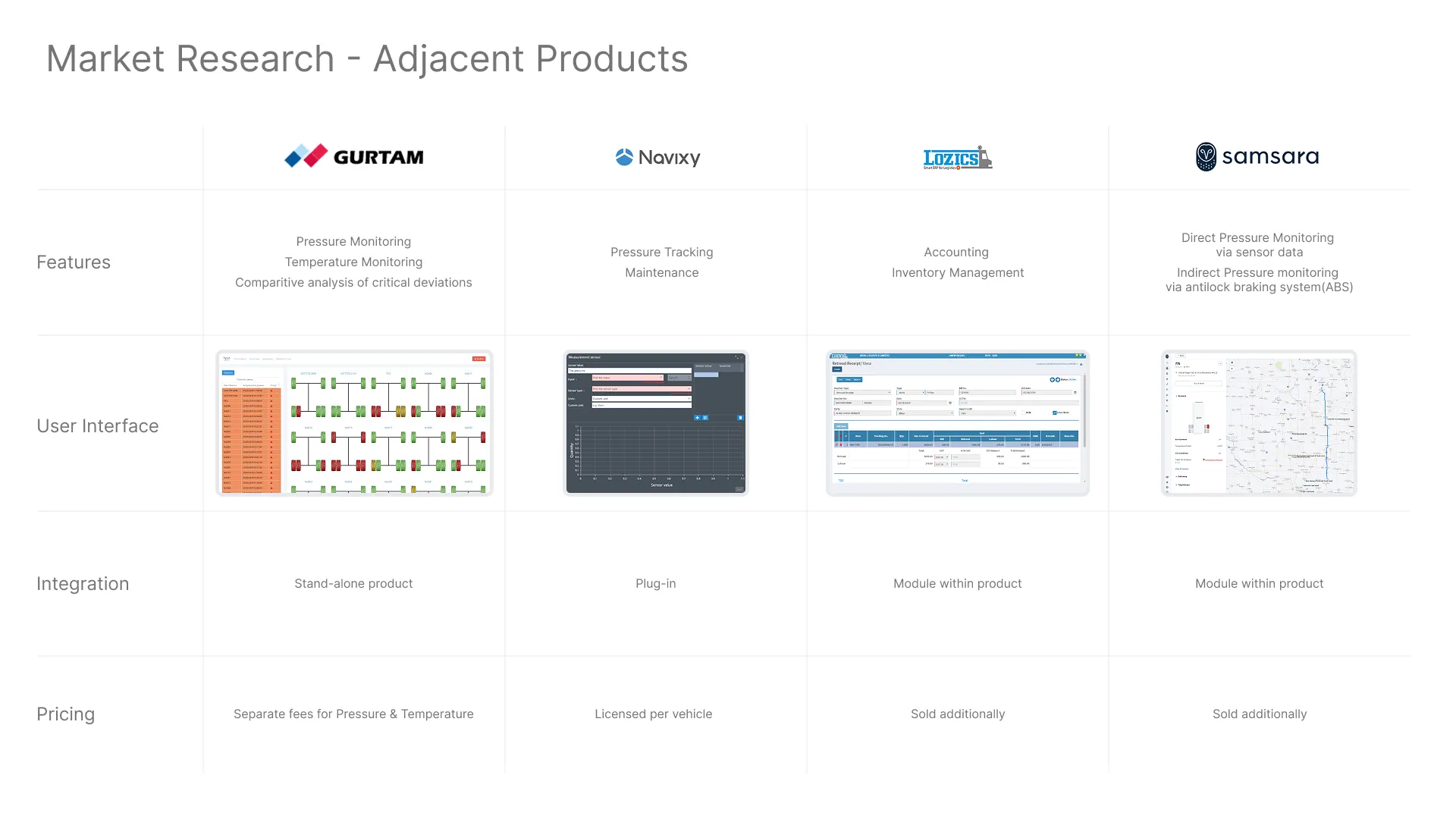
Market and competitor research (including hands-on testing of Fleetx devices and client interviews with existing LocoNav customers) showed no competitor offered a true full-stack TMS — most covered only a sub-segment like pressure monitoring or inventory. That gap defined the product goals: easy-to-scan data visualization, real-time monitoring and predictive alerts, safety-first design, and seamless integration with LocoNav's existing modules (trips, maintenance, vehicle details).
4. Design Exploration
Explorations covered the core surfaces end to end: information architecture, landing page, vehicle representation, tyre upload/details forms, and tyre logs — along with specific use-case flows like moving a discarded tyre to inventory and reassigning a new one to an empty position.
5. Key Designs
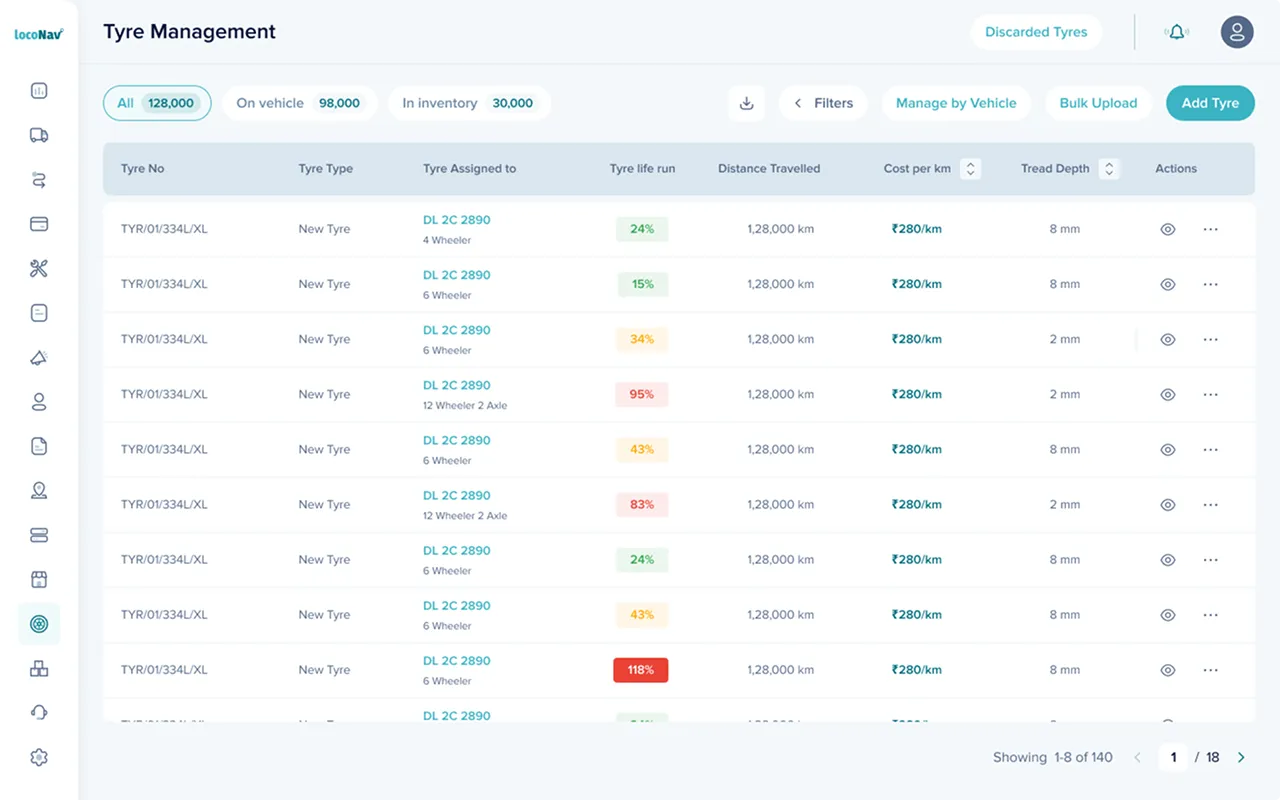
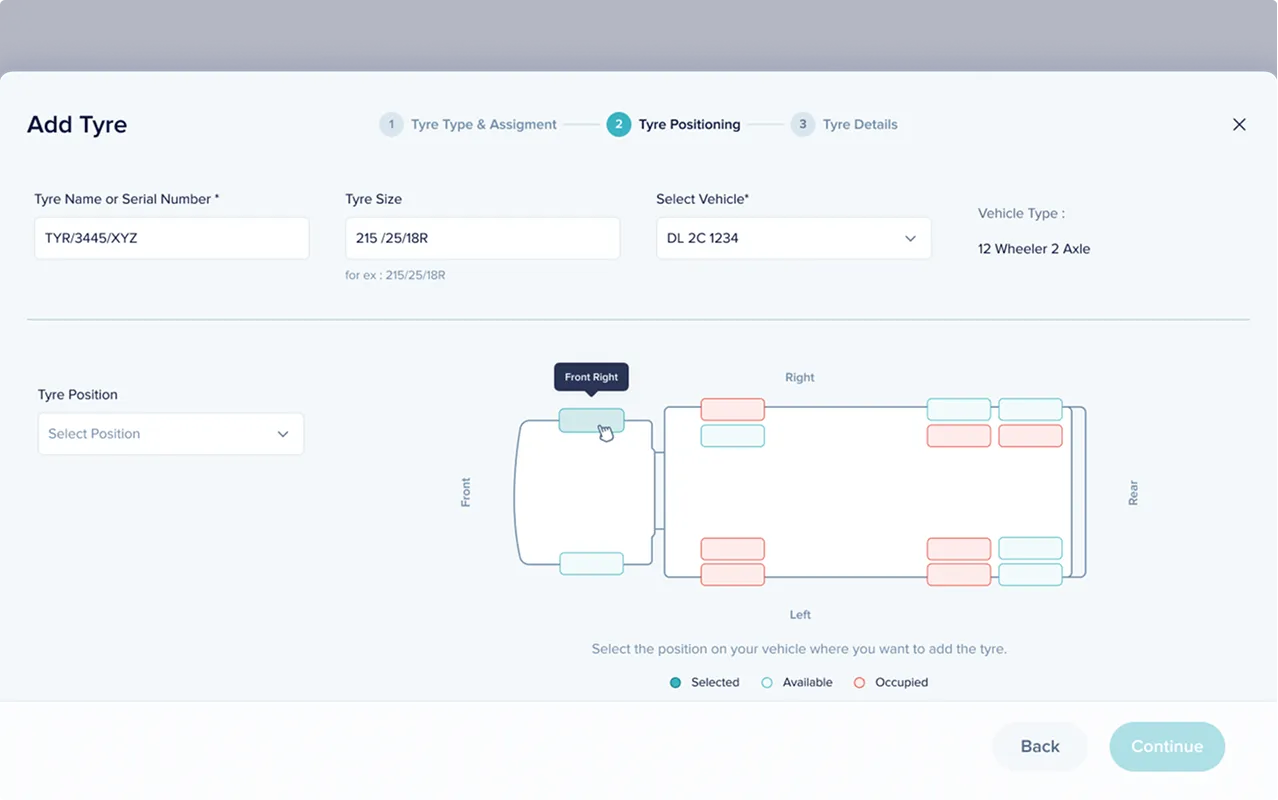
Landing Page & Add Tyre Form — streamlined data entry and a clear system overview for fleet managers.
Tyre Logs — centralized view for tread depth, tyre pressure, repair/maintenance history, and system logs.
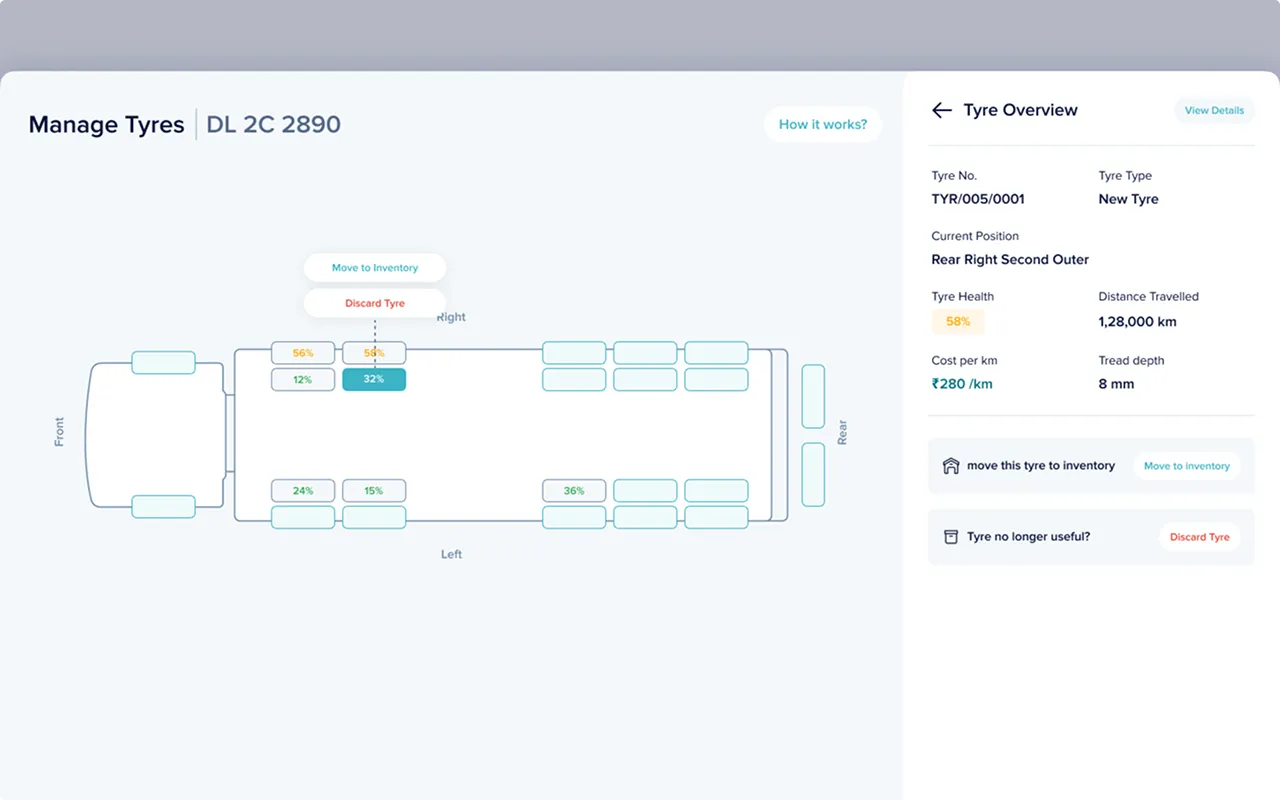
Manage Tyres — a single page to manage every tyre on a vehicle, see health/status at a glance, and take direct action.
6. Product Realisation — The RFID Pivot
Demos with interested clients surfaced a critical need from large fleet owners: RFID tag scanning. This became a turning point — rather than shipping web-only, the team built a companion mobile app carrying the same core features plus RFID scanning, bridging the physical and digital tracking of tyres.
7. Future Scope
- Vehicle Health/Detail page with AI-powered suggestions for tyre replacement ahead of long trips
- Expense management analytics (cost per km)
- Visual, map-based representation of fleet vehicles in place of tabular dashboards
If you want to read full case study, click below. View the full case study deck