How we redefined the ux of fleet tech industry
| Role: | UX Designer |
| Team: | 2 Product Manager, 3 Frontend Devs, Engineering Manager, Head of Engineering, 1 Backend Dev, 1 QA Engineer, Design Director, Viusal Designer, Sr UX Designer & UX Designer (me) |
| Timeline: | 2023 (6 months) |
| Platform: | LocoNav - Video Telematics & Fleet Management Platform |
If you want to read full case study, click below, otherwise scroll so read summary. View the full case study deck
1. Role
Led the Video Telematics solution end-to-end. The project began as a team effort under tight timelines, and I took over direction after the initial setup — eventually leading it through to its integration into LocoNav's main Fleet Management platform.
2. The Problem
Fleet owners carry high-value goods, making security and verification a constant concern. The real gap wasn't technical — it was trust. Drivers and fleet managers lacked a shared source of truth, especially in "dark zones" with no connectivity, where incident verification became a dispute rather than a fact.
To move fast, we built our front-end layer on top of an existing platform's technology rather than starting from scratch — prioritizing speed to market over a ground-up rebuild.
3. Design Philosophy
Three principles anchored every screen:
- Simple — fleet management is already data-heavy; the interface needed to cut through, not add to, the noise.
- Accessible — used globally across wildly different devices and screen densities.
- Scalable — built to absorb new features as the product matured.
This design system later became a genuine differentiator — some clients onboarded specifically because the experience outperformed competitors.
4. Key Redesigns
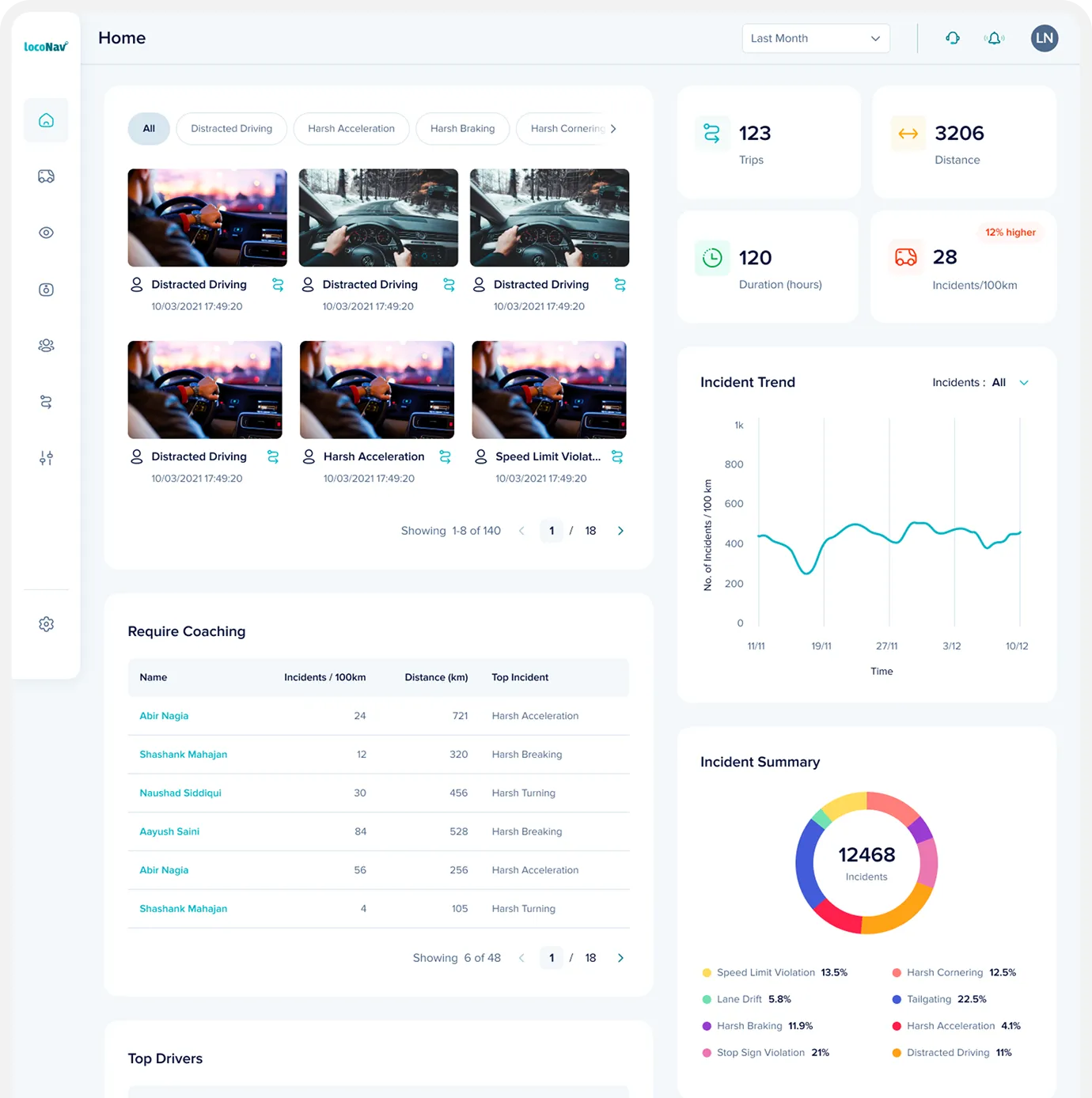
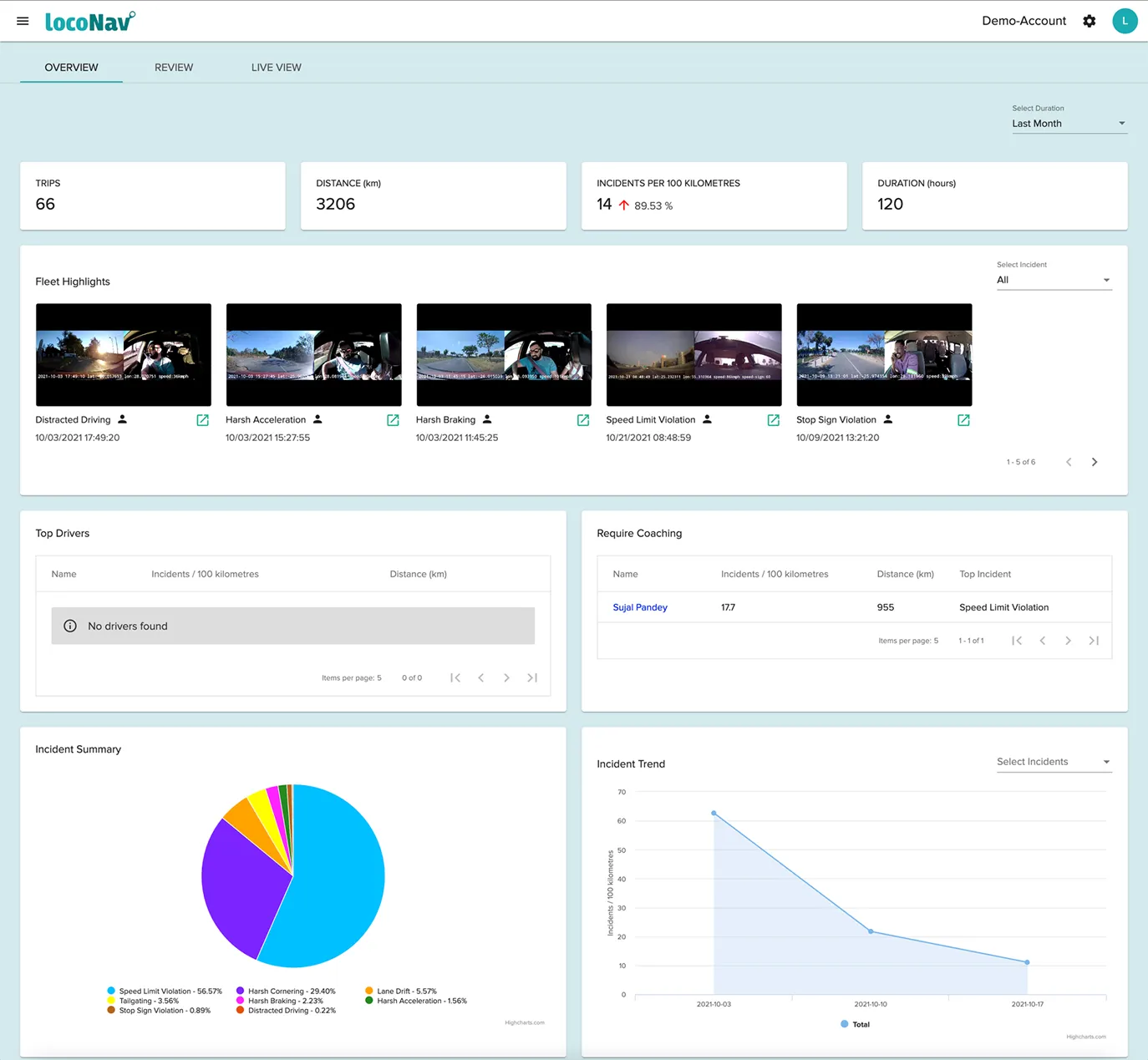
Platform Dashboard — old layout buried KPIs below excess whitespace, mixed icon styles, and inconsistent headings. Redesigned to surface KPIs and incident video in the first fold, add icon-led scanability, and create clear visual grouping.
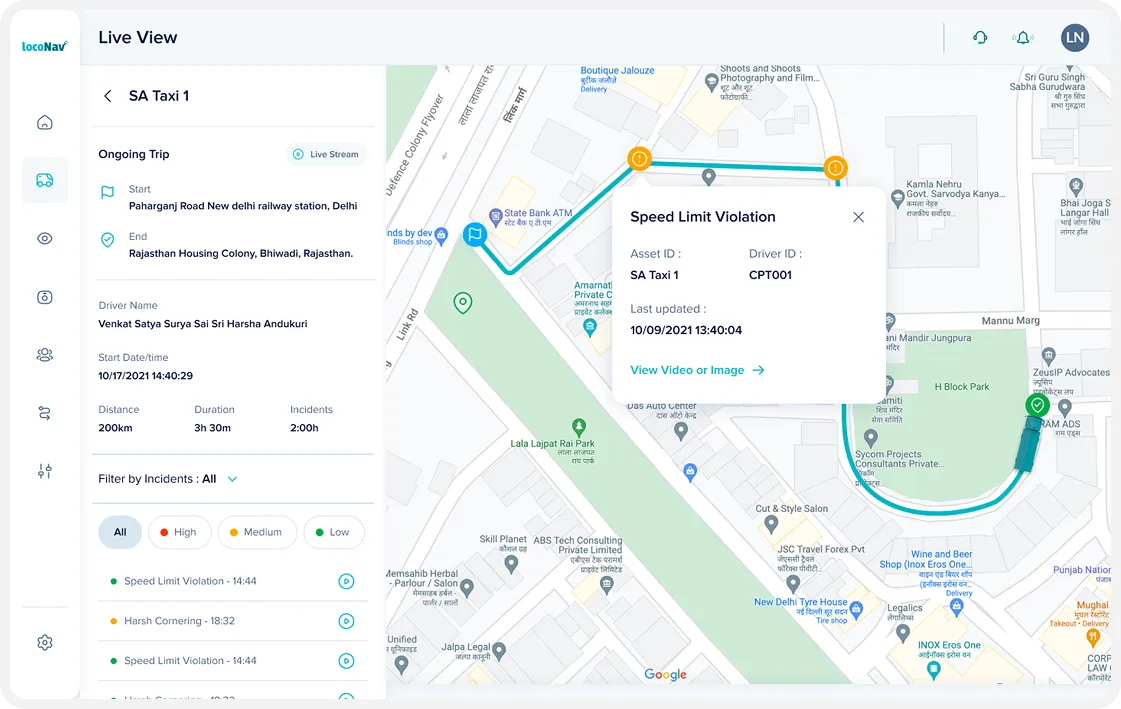
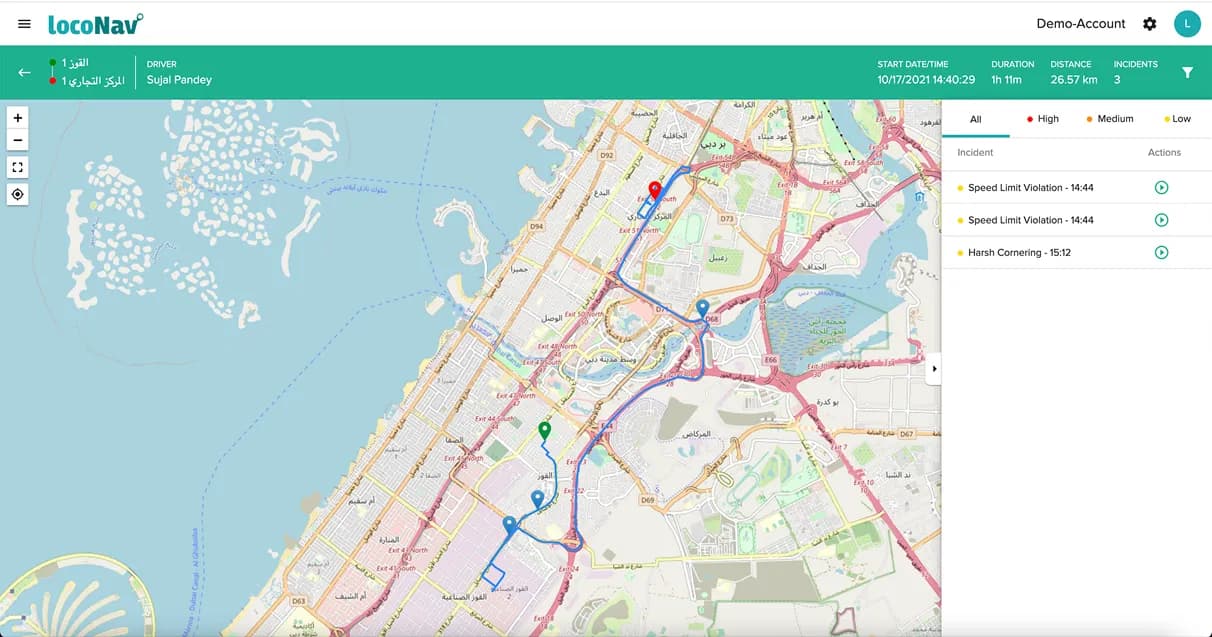
Trips View — old page had a disorienting inverted-L eye path. Redesigned into two clear zones: trip data on the left, live map tracking on the right.
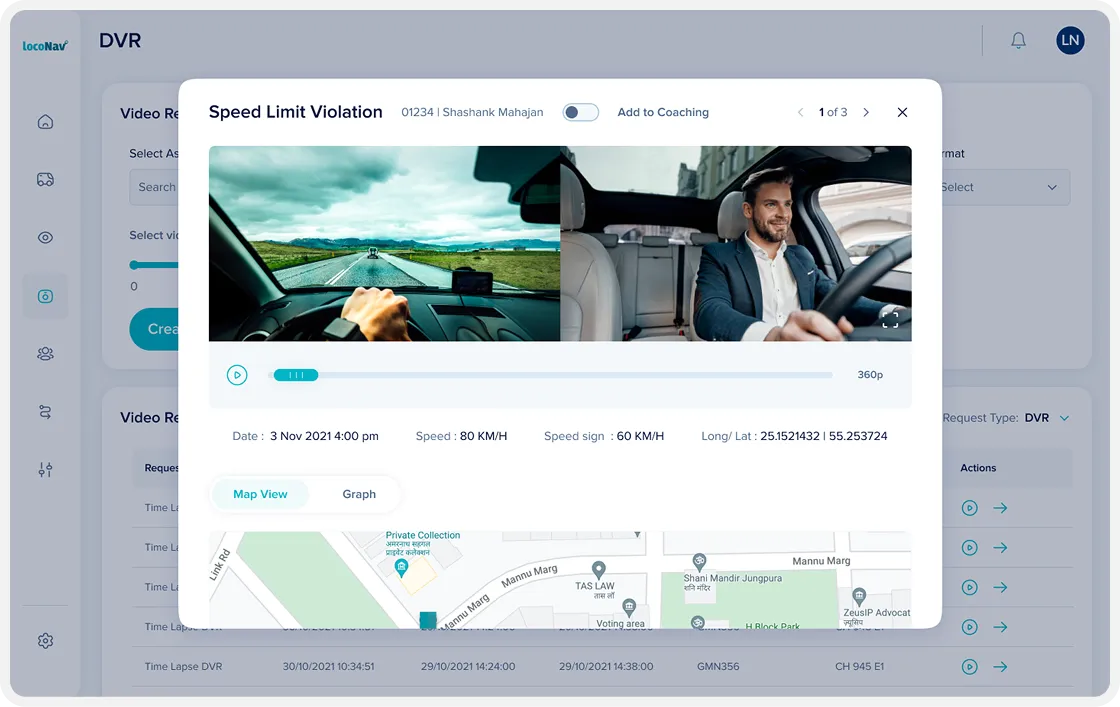
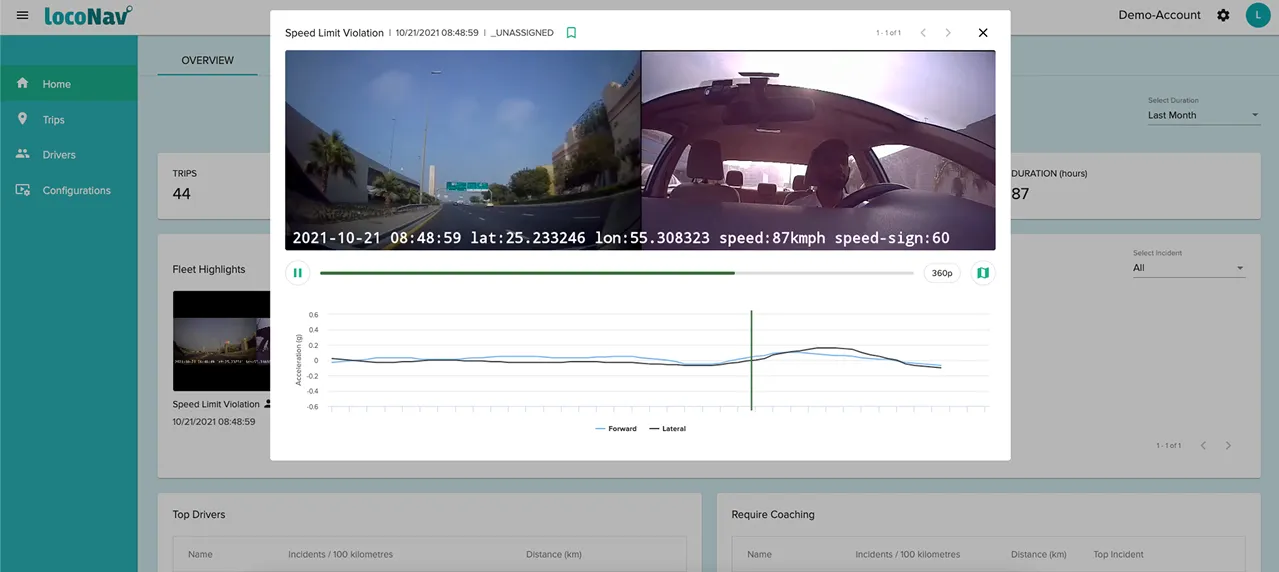
Incident Video Playback — old modal buried the "add to coaching" action and misplaced the map/graph switcher. Redesigned to surface real-time data below the video (in case of upload/network issues) and clarify both actions.
5. Impact
- External — Recognized LocoNav as a UX-focused video telematics provider; helped close key enterprise onboardings.
- Internal — Validated the new design system at smaller scale before rolling it out to the main platform, ironing out issues early.
- Platform expansion — Integration into LocoNav's core Fleet Management platform, driven by strong demand for the combined offering.
- Revenue — Reached 50% of LocoNav's total annual revenue by H1 2024.
If you want to read full case study, click below. View the full case study deck